Originally published in 2023; revisited as part of an ongoing study of how ideas become songs, images, objects, and memorable experiences.
Ideation and storytelling are complementary ways of helping an idea travel from possibility into memory and form. Together with mnemonics and hands-on making, they create a continuous creative cycle. Ideation opens possibilities. Storytelling gives selected possibilities direction. Mnemonics help an idea survive in memory. Physical and visual forms give it consequence in the world.
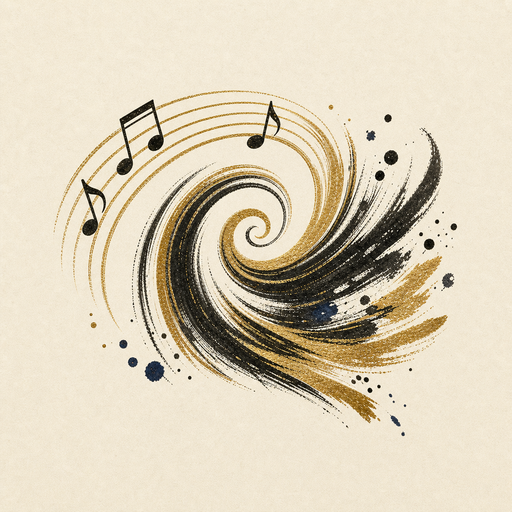
This relationship matters well beyond advertising, education, or product design. Songwriting uses rhythm, repetition, melody, and image to make feeling memorable. Fine art uses composition, material, sequence, omission, and recurring forms to let meaning unfold through looking. Both practices turn an idea into an experience that can be carried by another person.
The more interesting question is therefore not simply, “How do I generate ideas?” It is:
What will help an idea travel—from imagination into form, from one medium into another, and from the maker’s memory into someone else’s?
Ideation opens the field
Ideation is the process of generating, developing, connecting, and communicating possibilities. It is often presented as a search for quantity: produce many ideas, suspend judgment, and select later. That freedom is useful, but ideation is not valuable only because it creates a larger list.
Its deeper role is to loosen the first interpretation. A lyric can become more than an illustration of its subject. A shape can become more than a symbol. A technical limitation can become a compositional rule. When several interpretations are allowed to coexist, the artist or designer can discover which relationships carry energy and which merely explain the premise.
Useful ideation practices
- Brainstorming expands the number of available possibilities before evaluation narrows them.
- Mind mapping reveals connections among images, emotions, materials, actions, and consequences.
- Prototyping moves an idea out of language so its physical, visual, or interactive behavior can be examined.
- Constraint-making deliberately limits a field—one gesture, one passage, one material, one transformation—so a vague idea can acquire character.
- Looking tests whether an idea remains alive after it becomes visible.
The last practice is easily overlooked. Generating an idea and seeing what it has become are different acts. As I explored in The Journey of Looking, the work itself begins to provide evidence. It may ask for revision, omission, a different scale, or an entirely different medium.
How ideation and storytelling shape relationships
Storytelling is sometimes reduced to a beginning, middle, and end. Sequence matters, but a story is more fundamentally a pattern of relationships and consequences. Something is introduced. Something changes. What follows carries evidence of what came before.
That principle applies even when an artwork contains no literal characters or plot. A line can hesitate, cross an occupied region, and disappear. A color can return altered. An empty space can feel different because the viewer has already encountered the form that once occupied it. The eye constructs continuity from change.
In songwriting, a verse can establish a situation, a chorus can return with accumulated meaning, and a bridge can change the listener’s understanding of everything repeated afterward. Melody, harmony, rhythm, and arrangement do narrative work alongside the words. A repeated line is not necessarily the same event twice.
Fine art can behave similarly across one surface or several works. A recurring form may move, erode, become partial, or leave only a trace. A collector encountering the works as a sequence can experience motion and memory without animation. Story is carried by what changes—and by what the work allows us to remember.
Mnemonics are structures for carrying meaning
Mnemonics are usually described as memory aids: acronyms, rhymes, vivid images, spatial associations, or patterned sequences. That definition is correct, but it can make mnemonics sound like tricks added after the important work is done.
In creative practice, memorability can be structural from the beginning. A song is one of the most powerful mnemonic forms we know. Meter organizes time. Rhyme creates expectation. Melody gives language a repeatable contour. A refrain lets an idea return without requiring the listener to reconstruct it from nothing.
Visual art develops its own memory structures. A distinctive silhouette, an interval of color, a repeated edge, an unusual material, or a carefully placed absence can remain with the viewer. The image need not summarize an argument. It can create a perceptual event strong enough to be recalled.
Common mnemonic forms
- Acronyms and initialisms compress a sequence into a compact verbal form.
- Rhythm, rhyme, and melody make time itself part of recall.
- Visual imagery attaches information to a vivid scene, shape, or transformation.
- Spatial placement uses location and movement to organize relationships.
- Material sensation connects memory to pressure, texture, weight, gesture, and bodily action.
This is where storytelling and mnemonics meet. A story is memorable partly because its changes create an organized path through experience. A mnemonic becomes meaningful when it carries more than information—when it restores an image, a feeling, a decision, or a relationship.
Hands-on making gives the idea resistance
A hands-on approach is not simply a nostalgic preference for physical tools. Drawing, painting, modeling, arranging, printing, cutting, and assembling introduce forms of resistance that thought alone cannot provide.
A material does not obey an intention perfectly. Water spreads. Graphite records pressure. Paper tears according to its fibers. Paint covers one thing while revealing another. Scale changes the body’s relationship to a mark. These consequences return information to the maker.
This is why prototyping and studio practice contribute to ideation rather than merely executing it. The hand discovers things the plan did not contain. Physical action makes an idea answerable to gravity, surface, sequence, effort, and revision.
Digital work also becomes tactile in a broader sense when its controls produce perceptible consequences and invite judgment. The important distinction is not physical versus digital. It is whether the process allows meaningful contact with the developing work—or keeps every decision safely abstract.
A creative cycle: open, shape, carry, materialize
These practices can be understood as four recurring movements:
- Open: Ideation generates alternatives and loosens the first interpretation.
- Shape: Storytelling selects relationships, sequence, tension, and consequence.
- Carry: Mnemonic structure gives the work something recognizable enough to survive in memory.
- Materialize: Making gives the idea form, resistance, and evidence that can be reviewed.
The cycle is not linear. Materializing an idea may reopen ideation. A memorable visual detail may become the beginning of a story. A song’s refrain may suggest a spatial sequence of paintings. An abstract experiment may teach a distinction that changes the next technical system.
That nonlinear movement is explored more fully in The Work Is Never Linear. Creative knowledge accumulates even when the works do not arrive in an orderly series. What one experiment learns can be carried into another through judgment, documentation, or a well-designed abstraction.
What songwriting and fine art share
Songwriting and fine art do not need to imitate each other in order to share a creative logic.
Both begin with more possibilities than the finished work can hold. Both require selection and omission. Both establish patterns and decide when to repeat, interrupt, or transform them. Both depend on the audience’s memory of what has already happened. Both can make a small gesture carry disproportionate emotional weight.
A song unfolds through time, while a still image is available at once—but looking also takes time. The eye moves, returns, compares, and remembers. Several static works can create an even more explicit passage as the viewer carries a form from one frame into the next.
This does not mean every song should become an illustration or every artwork should tell a literal story. The shared opportunity is subtler: each medium can preserve the approach and retreat of an idea without explaining it away.
Questions for developing an idea
- What is the idea before it becomes an object or image?
- Which relationship changes, and what consequence should remain?
- What might the audience remember after the details have faded?
- Could rhythm, repetition, placement, or material carry that memory?
- What becomes clearer when the idea is made physically or visually?
- Which element explains the premise without strengthening the experience?
- What can be removed while leaving the work more active?
Conclusion: ideas become valuable by traveling
Ideation, storytelling, mnemonics, and hands-on making are not isolated tools. Together they describe how an idea acquires possibility, direction, memory, and form.
Ideation keeps the field open long enough for discovery. Storytelling organizes change. Mnemonics give selected relationships a way to persist. Making allows the idea to encounter the world and return with evidence.
The goal is not simply to make ideas easier to remember. It is to create songs, images, objects, and experiences that reward being remembered—works whose form continues to unfold after the first encounter.
3 thoughts on “Ideation and Storytelling: How Songs, Images, and Mnemonics Carry Ideas”