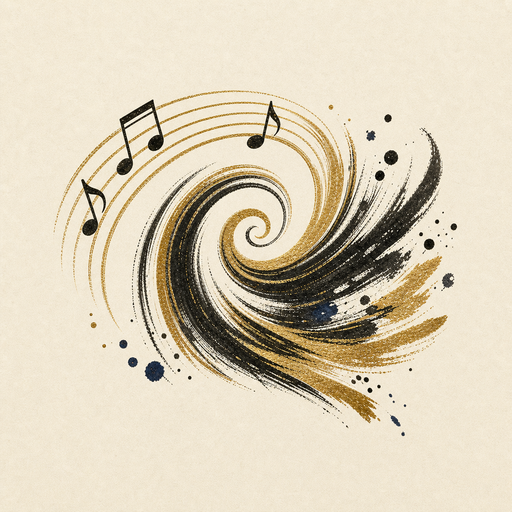
An abstract visual interpretation of music can begin with images suggested by a song, but serious artwork should do more than place those images on a canvas.
The objective is not to illustrate the lyrics line by line. It is to identify a human experience carried by the song and answer it through a different medium.
How an Abstract Visual Interpretation of Music Begins
Find the Human Center
Begin with one plain sentence:
What human experience sits beneath this song?
The answer may concern devotion, grief, endurance, belonging, reconciliation, doubt, memory, or renewal. It should not name a visual style, color palette, or software tool.
Name the Tension
Strong abstract work often holds two forces at once:
- connection and separation;
- fragility and endurance;
- proof and belief;
- motion and stillness;
- grief and renewal;
- memory and disappearance; or
- control and surrender.
This tension gives the visual work something to sustain. A single mood can easily become decoration.
Develop a Visual Grammar
Translate the tension into a restrained set of decisions:
- gesture: smooth, interrupted, repeated, trembling, or expanding;
- structure: path, field, orbit, grid, network, fracture, threshold, or void;
- density: crowded, open, or alternating;
- edge: sharp, veiled, eroded, layered, or unresolved;
- rhythm: regular, syncopated, paused, accelerating, or returning;
- light: emerging, reflected, flickering, obscured, or absent;
- color: harmonious, conflicting, limited, or interrupted; and
- material: transparent, absorbent, resistant, accumulated, or worn.
The grammar should respond to the song without listing its nouns.
Choose the Medium for a Reason
Physical handmade art can carry material presence, direct gesture, texture, and a unique object.
Digitally handmade art can preserve direct human composition while allowing precise layering, revision, and relationships difficult to achieve physically.
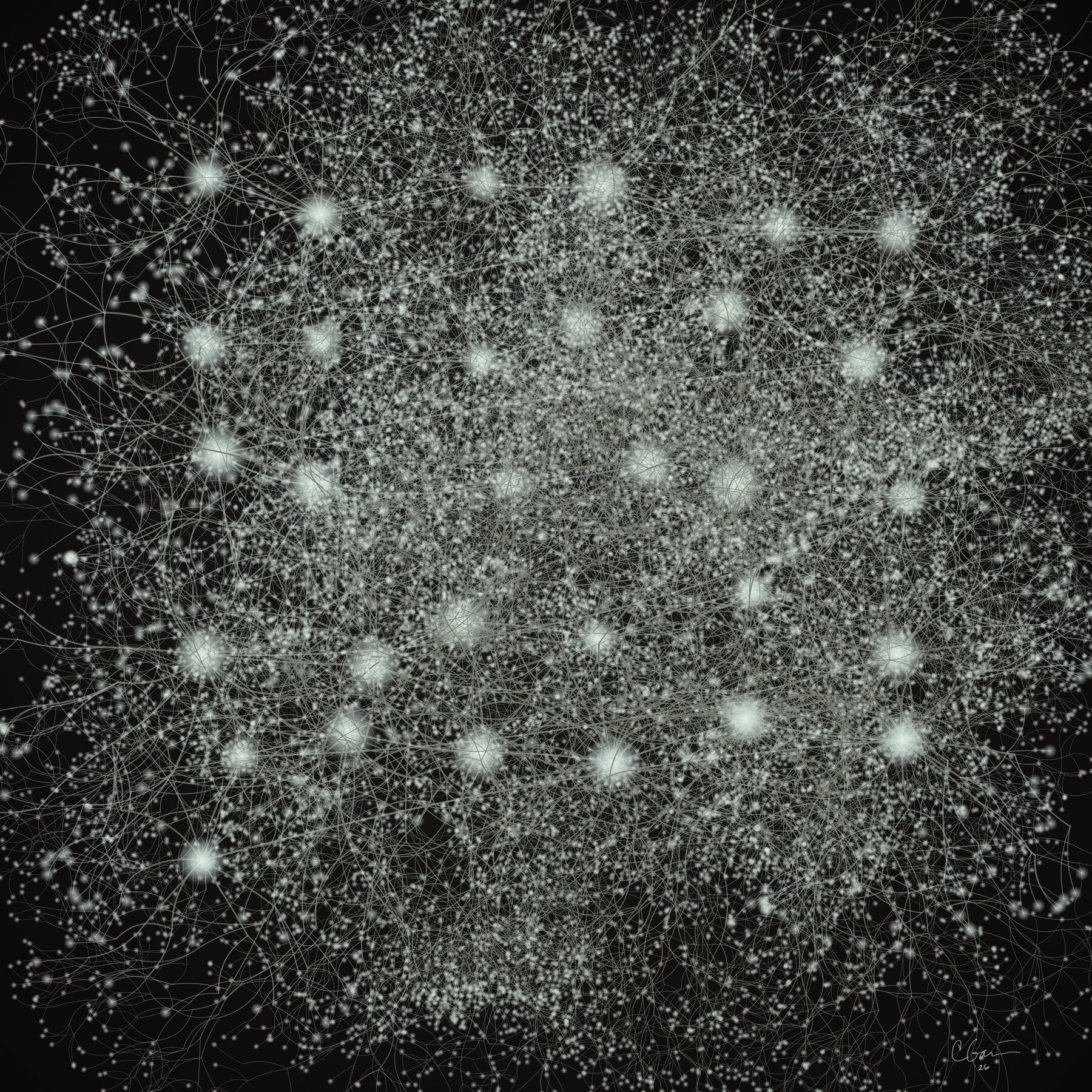
Computationally or system-rendered art can express rules, networks, emergence, repetition, density, and controlled variation.
Hybrid work may move among these forms.
The medium should contribute to the meaning. Its role should also be described truthfully.
Write a Visual Score
Before making the finished work, record:
- the song and version;
- the human center;
- the central tension;
- three to five visual rules;
- the palette or material family;
- what must be avoided;
- the intended medium and scale;
- the relationship to other works; and
- the test for completion.
The score adds discipline without predetermining the image.
Let the Artwork Disagree
The visual work does not have to repeat the song’s conclusion.
A hopeful song may produce an image in which uncertainty remains. A song about endurance may lead to a fragile surface. A lyric about movement may be answered by stillness.
That difference is where the artwork becomes a second voice rather than packaging.
Review It as Art
Before adding the work to the catalog, ask:
- Does it carry the tension without an explanation?
- Is it too literal?
- Is it decorative where the song is difficult?
- Does its medium contribute meaning?
- Can it stand alone for someone who has never heard the song?
- Does hearing the song deepen rather than rescue it?
- Is it strong enough to belong to the developing body of work?
Not every attempt needs to become inventory.
Preserve the Honest Process
Keep the visual score, relevant studies, medium details, source files, photographs, and creation record. Preserve rejected directions only when they truly formed part of the work’s history.
Do not manufacture process material later to make the work appear more important.
The collector does not need to see everything. The catalog should still know what happened.
Key Questions and Example Answers
Are we illustrating the lyrics?
Example answer: No. We select a human tension carried by the song and create an independent abstract response.
Can software choose the emotional center?
Example answer: Software may help organize notes or test formal possibilities. The artist remains responsible for deciding what the song means and whether the work is finished.
Must the artwork use the song’s imagery?
Example answer: No. Literal imagery may be excluded when it prevents a more substantial abstract response.
How many artworks should a song receive?
Example answer: Only as many as the artistic idea supports. One resolved work is better than a forced series.
What makes the work independent?
Example answer: It has its own visual structure, presence, and meaning. Knowing the song adds context but is not required to make the work function.
Continue the Studio Investigation
See the method tested in practice in Before the Painting, then follow the line-to-section-to-whole problem in When the Parts Work but the Whole Does Not.