Digital art collecting is growing. So why are so many working artists still struggling?
That question keeps coming up in the artist groups I follow. Some people blame AI. AI is part of the story, but I do not think it explains the whole problem.
Is digital art really becoming collectible?
Yes, at least at the established end of the market.
Art Basel reports that digital art is the third most acquired medium among high-net-worth collectors, after painting and sculpture. That is real progress.
But a medium can grow while most of its artists see little benefit. Sales may still gather around famous names, trusted galleries, and platforms that collectors already know.
Then why are lesser-known artists having such a hard time?
Because making good work and getting it collected are different problems.
An unfamiliar artist has to overcome several gaps:
- People have to discover the work.
- They have to trust the artist.
- They have to understand what they are buying.
- They need confidence that the work can be displayed and preserved.
- They need a reason to return after the first impression.
Social-media visibility helps, but attention is not the same as trust. Likes are not the same as collectors.
Is AI making this worse?
In some ways, yes.
AI adds more images to an already crowded field. It can make visual novelty feel cheap and immediate. It also creates fair questions about training sources, authorship, and what the artist actually contributed.
Still, artists were struggling with discovery, pricing, gallery access, and market concentration before generative AI arrived. AI did not invent those problems.
How should we compare hand painting, generative art, and AI?
I would not rank them by tool. I would ask where the artist made the meaningful decisions.
| Method | Where I look for authorship |
|---|---|
| Painting and drawing | Gesture, composition, material response, revision, and the history left on the surface. |
| Generative art without AI | The rules, constraints, mappings, inputs, edition logic, and the artist’s choice of which results survive. |
| AI-assisted art | The concept, source choices, direction, selection, arrangement, repainting, and other meaningful changes made by the artist. |
None of these methods guarantees good art. A handmade painting can be predictable. A rule-based system can be personal and surprising. An AI-assisted work can involve deep judgment, or almost none.
The tool tells me where to look. It does not make the decision for me.
What is a digital collector actually buying?
That needs a clearer answer than “a file.”
A collector may be buying an edition, an archival print, a plotted drawing, a display-ready object, or a digital work with specific presentation rights. The artist should explain:
- what the work is;
- how many editions exist;
- how it is authenticated;
- which rights stay with the artist;
- how it should be displayed;
- and what happens if a platform or file format disappears.
Why does provenance matter so much?
Because trust is harder to build when there is no single physical object.
Provenance does not need to turn the art into paperwork. It should answer the collector’s basic questions: Who made this? When? From what process? Which version is this? What was accepted, revised, or rejected?
This matters even more when code or AI is involved. A system can produce a finished-looking image long before the artist has made a finished artwork.
What does the artist still have to do?
Look.
Then reject, revise, isolate, combine, redraw, repaint, or walk away.
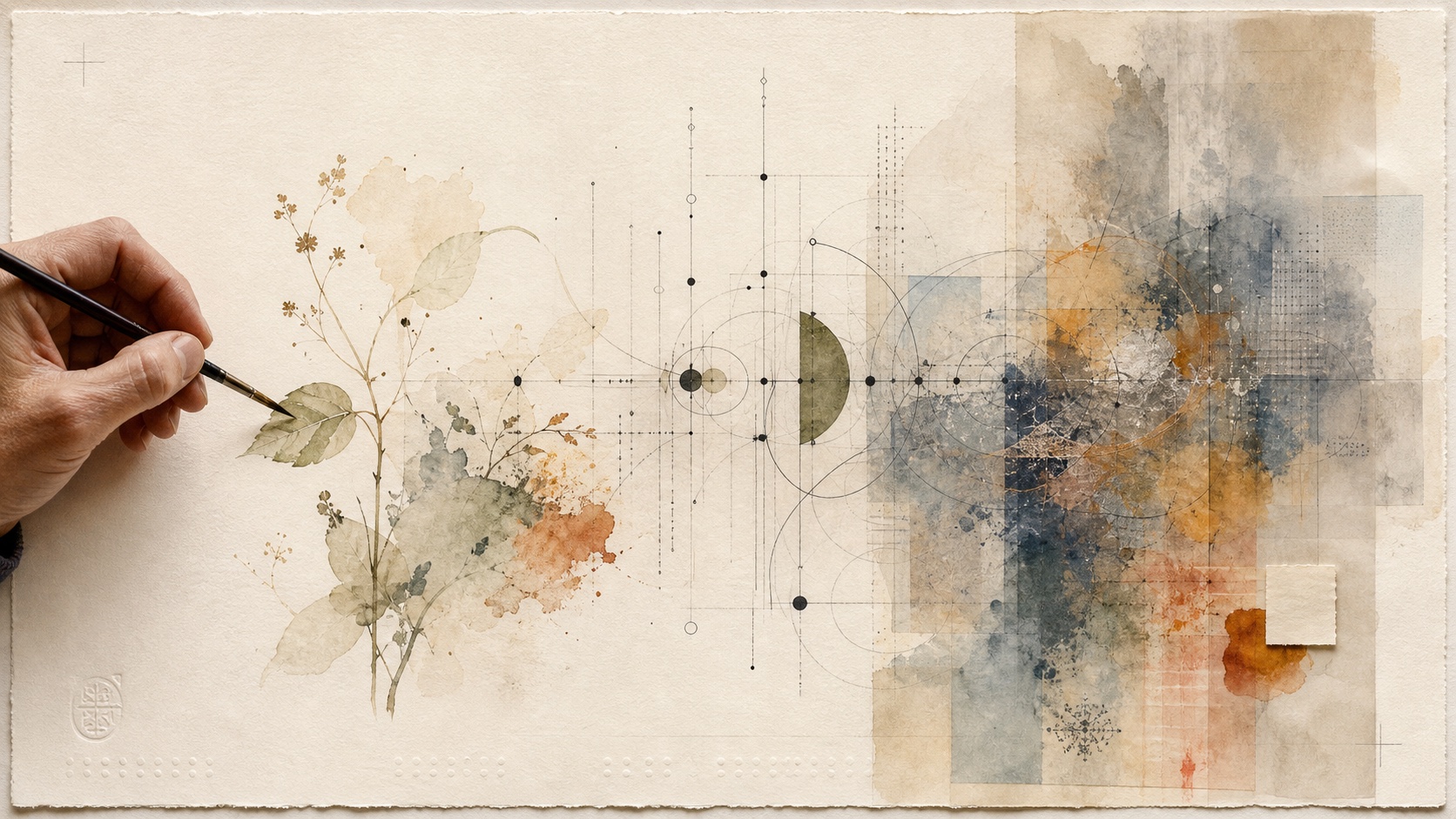
That is why I keep moving among brushes, digital brushes, and code. In Code the Conditions, Paint the Decision, I ask whether the system should set the conditions while the artist keeps the final decision. In The Work Is Never Linear, I look at how one experiment teaches the next.
What am I building at IdeaVortex?
A growing catalog, not an endless stream of outputs.
Seasonal Drift: “Fall Was Beautiful, Soaking Up the Sun” follows one song-based visual study. The IdeaVortex collector guide explains the larger idea of turning original songs into independent visual art.
Some studies may become paintings. Some may become archival prints or plotted works. Some will remain digital. Some will be rejected. The catalog should show that selection rather than hide it.
Is this also marketing?
Of course. Artists need to help people find the work.
But useful marketing should make the catalog easier to understand. It should not inflate every experiment into a masterpiece or pretend that every output is for sale.
For a collector, the interesting part may be seeing the practice while it forms: which ideas return, which materials change them, and which studies earn their place in the catalog.
What might collectors value next?
I expect collectors will care less about whether a work is simply “digital” and more about whether it has:
- a recognizable artistic point of view;
- clear authorship;
- honest provenance;
- a durable form of ownership;
- thoughtful presentation;
- and a reason to keep looking.
That last one matters most. The work has to survive after the technology stops being new.
So, are working artists benefiting?
Some are. Many are not, at least not yet.
Digital collecting can grow without becoming a healthy market for independent artists. Closing that gap will take better discovery, clearer ownership, stronger provenance, and collectors willing to look beyond familiar names.
I would like to hear from both sides. What helps you trust an artist you do not know? And what makes a digital work feel worth living with rather than merely worth scrolling past?
Related reading: Fair Use and Popular Songs.