StepCard began as an offline-first, QR-based application. As my work with music developed, I realized that it could answer a larger problem: songs are usually presented in fixed containers, even when the stories around them are not fixed at all.
An album gives everyone the same set of songs in the same general package. A streaming platform reduces that package even further. The listener sees a cover, a title, an artist name, and a play button.
StepCard takes a different approach. It can present songs in dynamic clusters and connect them with images, video, text, decisions, and other forms of interaction. Instead of only playing a collection, it can guide someone through an authored experience.
What the Platforms Do Not Do
Independent musicians pay distributors to deliver music to streaming platforms. The platforms make the songs available to play. That is useful, but it is also where their responsibility usually ends.
The distributor does not create a meaningful path through the work. The streaming platform does not explain why one song belongs with another. Neither one builds the story, introduces the visual art, or helps a listener understand the human process behind the music.
Even when creators pay for distribution, they are still largely responsible for getting viewed, building an audience, and creating context around the work.
This is particularly difficult for an independent songwriter without an established following. A song can be carefully written and produced, then disappear into a catalog containing millions of other choices.
StepCard is my attempt to create another way in.
Beyond the Fixed Album
An album is a fixed set. Its order may be carefully designed, but every listener generally receives the same sequence.
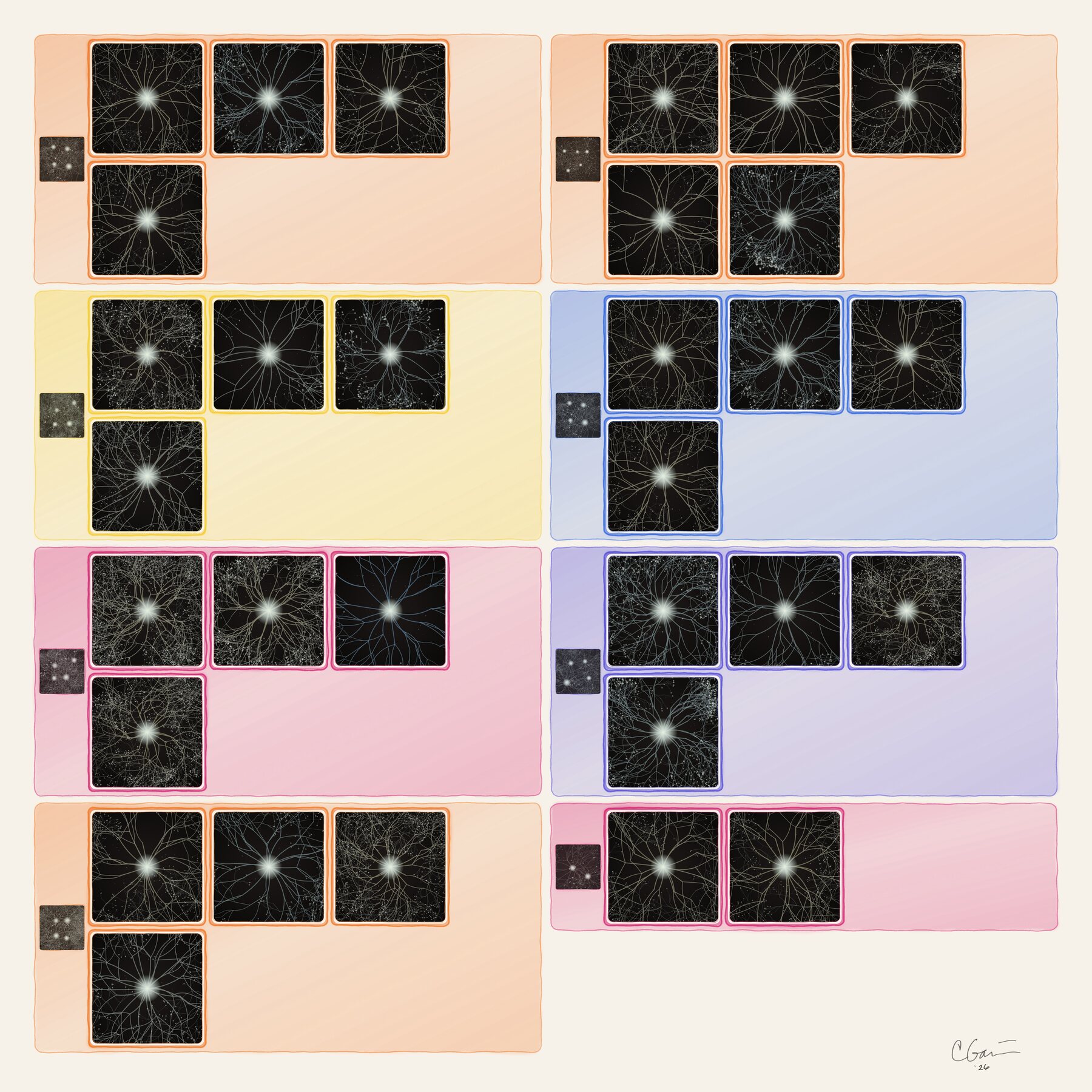
StepCard can organize music into dynamic clusters instead. A cluster might be built around a story, subject, mood, place, visual collection, or intended experience. Songs do not have to belong to only one permanent package.
The same song could participate in more than one meaningful path. Its relationship to the other media can change according to the story being told or the goal of the experience.
This is not about making albums obsolete. I still value albums as artistic forms. It is about adding a format that behaves differently when the work calls for it.
The Authoring Side of StepCard
The important part of StepCard is not the QR code by itself. StepCard includes an authoring side where a creator defines a sequence of steps intended to achieve a goal.
Those steps can involve different kinds of media. A person might encounter a song, then an image, a piece of writing, a video, or another prompt. The sequence can also include user interaction and decision-making.
The listener is no longer limited to pressing play and waiting for the next track. A choice can influence what comes next. A response can take the experience in another direction. Different paths can reveal different relationships among the songs and supporting material.
This makes StepCard useful for storytelling because a story does not always have to be a passive, straight line. It can invite discovery.
An Experience Designed Around a Goal
My background as a software developer shapes the way I think about this. For more than thirty years, I often designed applications and processes for other people. A useful process is not merely a list of screens. It is a sequence that helps someone arrive somewhere.
StepCard uses that same principle. The author begins with a goal and defines the steps that support it.
For music, the goal could be to introduce a collection, tell the story behind a song, connect audio with visual art, or help someone discover work they would not have encountered through a normal catalog. Other authors may find entirely different uses.
The media are not placed together simply because the technology allows it. Each element should have a purpose in the experience.
When an Image Becomes the QR Code
StepCard can also use an image as a QR code.
That changes the relationship between the doorway and the experience. A conventional QR code is functional, but it often looks separate from the artwork or story surrounding it. When an image can perform that role, the entry point can participate in the visual language of the project.
This is especially relevant to my own work because I am bringing music and fine art closer together. An artwork can be more than decoration for a song. It can become the way someone enters the larger experience.
A physical print, card, display, or other visual object can connect with music and interactive media without being covered by a generic square that feels added afterward.
Offline-First Still Matters
StepCard started as an offline-first application, and that remains an important part of its identity.
Offline-first does not mean rejecting the internet. It means designing the experience so that unreliable connectivity does not automatically make it useless.
That can open possibilities in physical settings, events, exhibits, and communities where a continuous connection should not be assumed. It also encourages a more deliberate relationship between what is carried locally and what is reached online.
The real purpose is access. A creative experience should not fail simply because the network conditions are not ideal.
Helping Songs Get Seen and Understood
Discovery is one of the hardest problems for independent music.
Streaming platforms are designed primarily to play music at scale. They recommend tracks, but they do not necessarily help a small creator build the particular story or interactive path that gives the work meaning.
StepCard gives the author control over that presentation. A song can be introduced through another song, an image, a question, or a story. Someone who enters through the visual art might discover the music. Someone who enters through a song might discover the larger collection.
This does not guarantee an audience. No technology can do that. But it creates more ways for the work to be encountered and more reasons for someone to continue exploring.
Connecting Music, Art, and Orrery Glyph
My creative work now includes songwriting, handmade art, digital art, and systems that can translate aspects of songs into visual forms.
Orrery Glyph can use lyrics and MIDI as inputs for art and video. StepCard addresses a different part of the experience: how songs, images, videos, writing, and choices can be presented together as an authored sequence.
One system helps create relationships between music and visual language. The other helps people move through the resulting world.
I can imagine a collector entering through an image, hearing the song connected with it, seeing another visual interpretation, and making choices that reveal a different path through the collection. The work becomes more than a group of files or a fixed playlist.
A Different Kind of Music Container
StepCard is still evolving, but its premise is now much clearer to me.
It is not simply a QR-code utility. It is not another streaming service, and it is not limited to music. It is an authoring and presentation system for building goal-oriented, multimedia experiences with interaction and choice.
For songwriters, it opens a way to move beyond the fixed album and the passive play button. For artists, it can connect physical and digital work. For storytellers, it can turn separate media into steps within a larger experience.
Most importantly, it gives creators control over something the distributors and platforms do not provide: the path through the work.
A temporary version of StepCard is available at IdeaVortex.com/stepcard. I will share more about the authoring system and its applications as the work develops.
Related: AI Songwriting: Why I Never Let AI Write My Songs
Related: I Wasn’t Meant to Be a Performer—But I Kept Writing Songs