
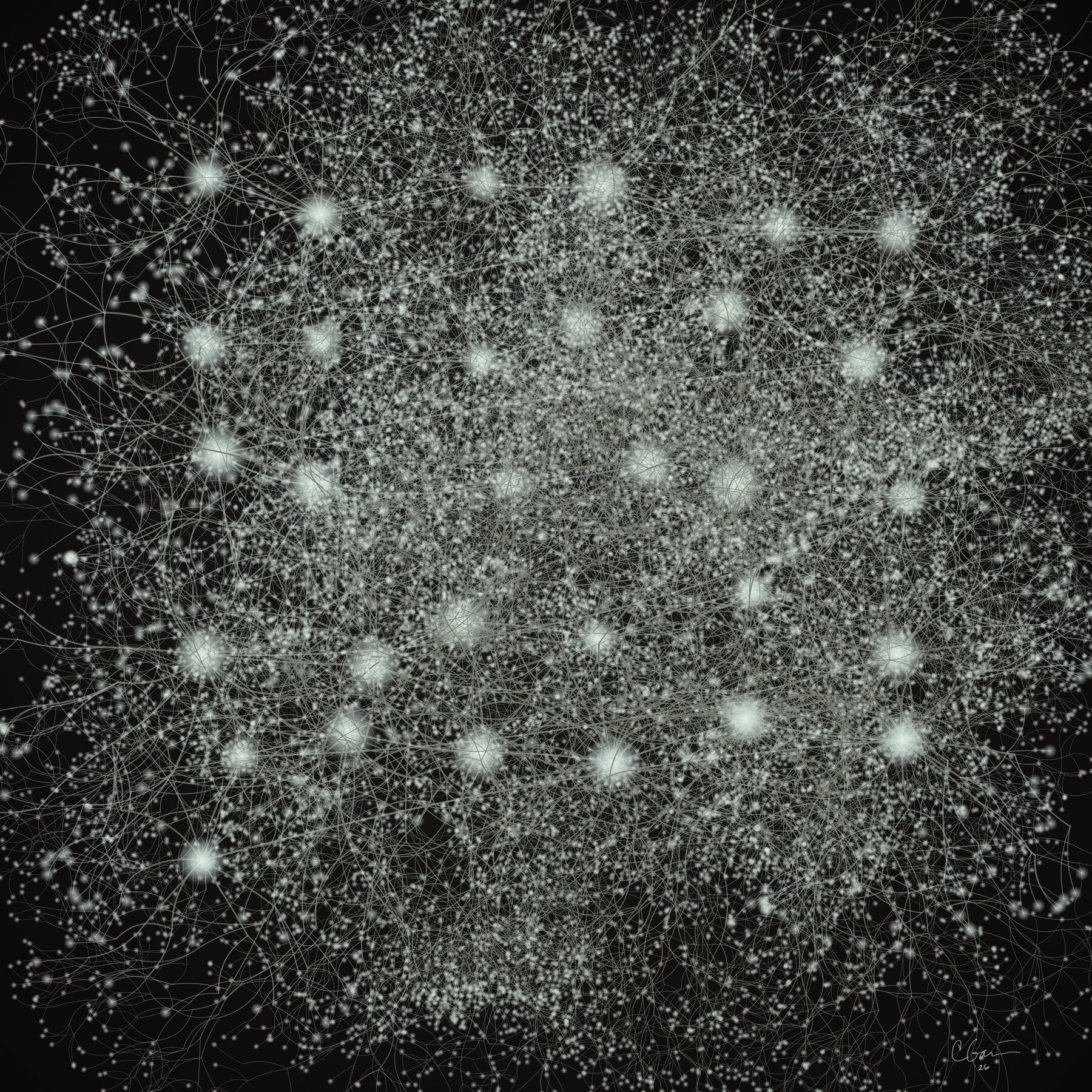
Selling art online for the first time was not something I expected to do. I had never sold a work of art before. The only thing I could remember selling was a 1974 Pinto. Then a song inspired by my daughter and her husband became a visual collection, and I found myself learning what it takes to offer that work seriously to collectors.
This was not a plan to put a picture on a product and call it finished. I wanted the physical print, the limited edition, the certificate, the buying experience, and the fulfillment process to respect the meaning of the original work. Selling art online for the first time forced me to think about every one of those decisions.
The Store Began With a Song
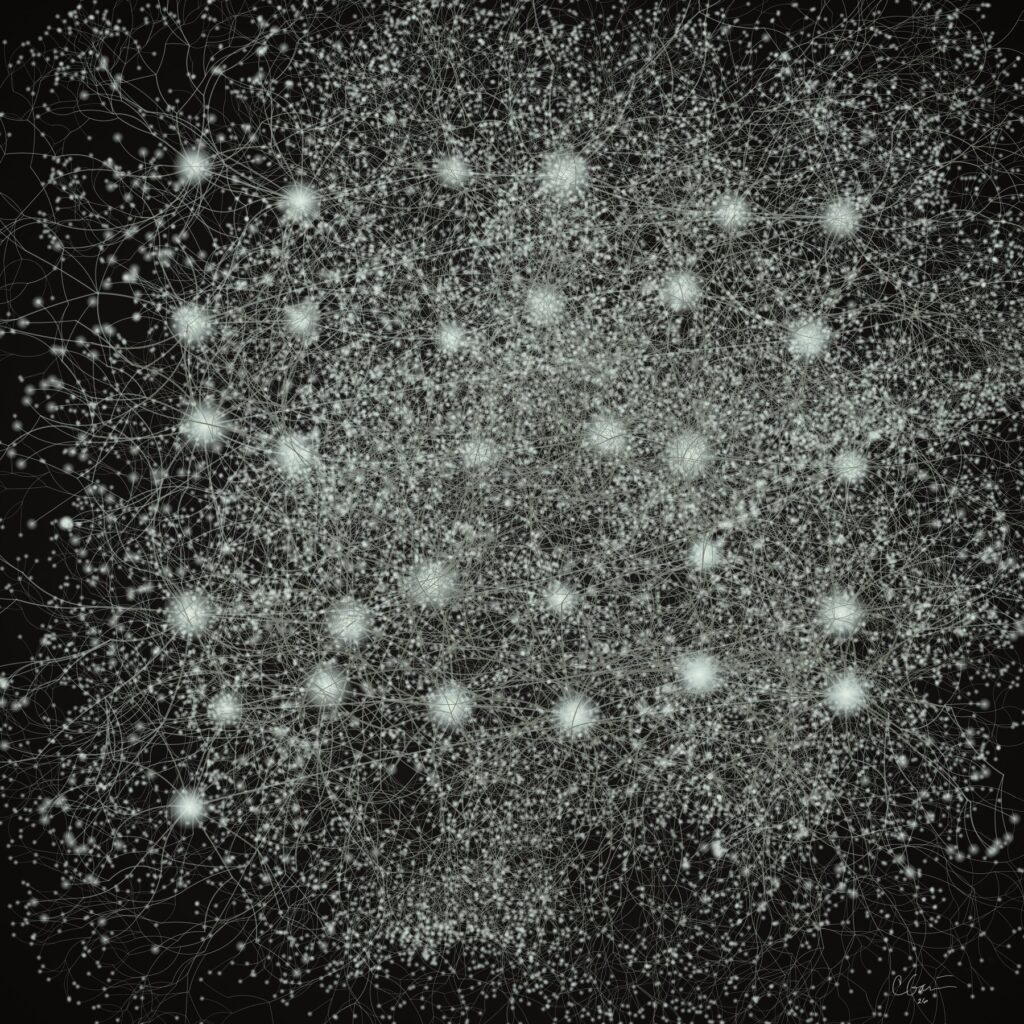
Love in the Cloud began as a song inspired by my daughter and her husband. Later, it became the second visual theme I developed through Orrery Glyph, a system I designed to translate information from music into themed visual art and video.
The result was not one isolated image. It became a black-and-white family of forms with its own visual language. I began to see the collection almost like the opening look in a fashion show. It establishes one mood and identity, but it also points toward other themes that can follow.
That distinction mattered when I began thinking about a store. I was not trying to turn IdeaVortex into a catalog of interchangeable decorations. I wanted a collector to be able to encounter the story, understand the relationship between the song and the artwork, and then choose whether to live with a physical piece of it.
A Screen Was Not Enough
I work digitally, but a fine-art print has to succeed as a physical object. A glowing monitor cannot tell me exactly what black ink, paper texture, scale, and reflected light will do in a room.
I invested in a Canon imagePROGRAF PRO-310 so I could examine the work myself. I tested the imagery on heavyweight Hahnemühle rag paper and later printed a larger 13-by-19-inch proof on Canon Pro Luster. My wife and I inspected the results together. The larger Luster print gave me confidence that the detail and tonal structure could survive the move from screen to paper.
That did not mean every future decision was settled. Different papers and surfaces can bring out different qualities. It did mean I had enough physical evidence to stop treating another test as a reason to delay everything else.
Limited Edition Has to Mean Something
I chose to open with nine Love in the Cloud artworks. Each is offered as a limited edition of nine 24-by-24-inch archival pigment prints on Hahnemühle German Etching paper.
A number on a webpage is not enough to make an edition trustworthy. The checkout inventory has to enforce the limit. The remaining count has to be tracked. The buyer needs a certificate that identifies the work and its place in the edition. For now, I also want to hand-sign each certificate with my artist signature.
This added a human pause inside an otherwise automated system. An order can arrive online and move toward professional printing and fulfillment, but it is held long enough for the signed certificate process to be handled properly. Automation supports the work. It does not erase my responsibility to it.
The Technology Was the Invisible Part
My professional life gave me more than 30 years of experience as an object-oriented software architect and developer. Even so, connecting the parts of a small art business was its own education.
IdeaVortex tells the story and presents the collection. Shopify handles the products, inventory, and secure checkout. Prodigi handles professional print fulfillment. The Self-Selling Art plugin connects each artwork record to its matching purchase path and displays the edition information on IdeaVortex.
To a buyer, the path should feel simple: discover the artwork, learn its story, choose a piece, and check out. Behind that path are product mappings, payment verification, shipping behavior, inventory rules, image masters, edition records, and a deliberate fulfillment hold.
Good architecture often disappears from the user’s experience. The complexity still exists, but it is carried by the system instead of being pushed onto the person trying to buy.
What Selling Art Online for the First Time Taught Me
- Start with meaning, not merchandise. The story of the song and the people behind it came before the product configuration.
- Inspect something physical. A screen is useful, but paper can reveal whether the artwork truly holds together.
- Scarcity needs a system. A limited edition should be protected by inventory and records, not only described in marketing language.
- Keep the human checkpoints that matter. My signed certificate is a small act, but it connects the physical print back to the artist.
- Do not let perfection become permanent delay. I can continue refining papers, presentation, and buyer options after opening. The first responsible version did not need to be the final version.
Open for Business, Still a Work in Progress
IdeaVortex is now open for business. That sentence feels strange and wonderful to write.
The store does not mean the experimentation is over. It means the work has crossed a threshold. A visitor can now move from reading about a song and its visual interpretation to owning a signed, limited physical edition.
Love in the Cloud is the starting point. I expect the art to keep moving through new themes, materials, visual identities, and perhaps commissioned interpretations of other music. The store gives those future ideas somewhere to arrive.