A collection does not need to begin with a famous name or a large purchase. It can begin with a relationship among works that you want to keep exploring.
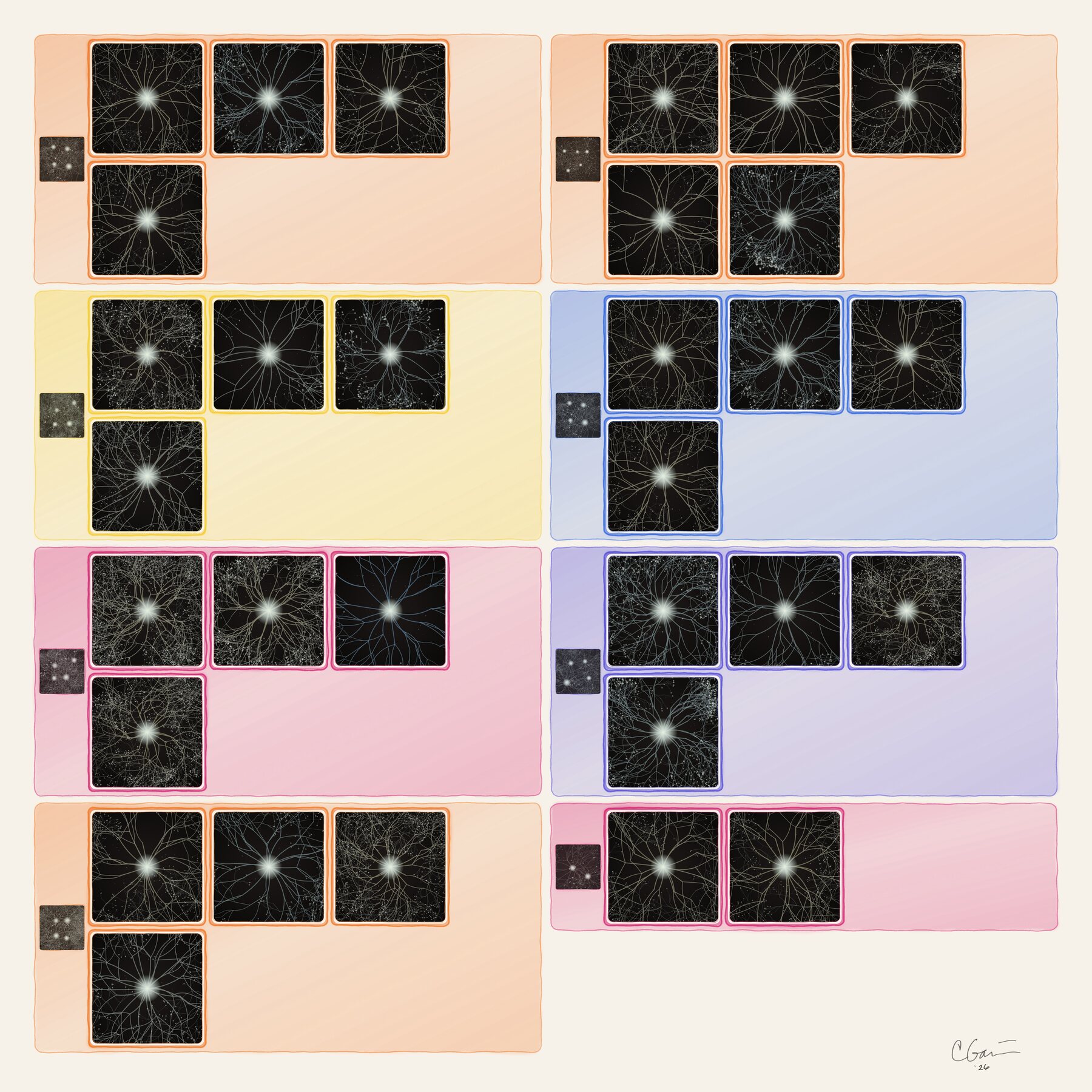
A music-and-art song cycle offers one such structure. It groups several songs and visual works around a shared human concern while allowing each artwork to stand independently.
Begin With a Human Theme
A song cycle may concern memory, family, endurance, faith, love, migration, belonging, or renewal.
Choose a theme that continues to hold your attention. Do not begin by trying to predict which theme will become fashionable.
Experience the Complete Cycle
Look at each work without music first.
Then listen to the related songs. Read the concise artist notes. Return to the works and observe what changed.
Ask:
- Which work has the strongest independent presence?
- Which relationship between song and image feels most convincing?
- Do the works deepen one another?
- Is there enough variation to reward continued looking?
- Does the cycle leave room for your own interpretation?
Understand the Connecting Rules
A cycle may share:
- a human tension;
- palette or material family;
- repeated gesture or structure;
- scale;
- method of variation;
- language relationship;
- or a recurring treatment of light, space, rhythm, or trace.
The works do not need to match. The connection should be more substantial than a shared title treatment.
Choose an Entry Point
Possible entry points include:
- one major unique work;
- a smaller study;
- one signed edition from each song;
- a paired work from related language versions;
- a complete small portfolio;
- or one work now with the intention of following the cycle over time.
The right entry point depends on the work, available space, budget, and depth of interest.
Confirm the Object and Record
Before acquisition, review:
- title, date, medium, dimensions, and condition;
- unique or edition status;
- edition size and proofs;
- signature and certificate;
- provenance;
- music relationship;
- included and excluded rights;
- display and care guidance;
- and whether future related works are planned.
These details should support the relationship with the art rather than replace it.
Think About Display
A song cycle does not have to be displayed all at once.
Works can be:
- hung as a group;
- distributed through related spaces;
- rotated;
- paired with a listening station used by choice;
- accompanied by a small printed cycle note; or
- experienced privately through a digital listening and catalog page.
Avoid requiring continuous sound in a shared room. The visual work should not depend on an audio loop to remain present.
Follow the Cycle as It Develops
A living song cycle may grow.
The artist should state whether the cycle is closed, open, or expected to develop within defined boundaries. Collectors can then decide whether they want one work, a representative group, or an ongoing relationship.
Growth should not quietly change the edition or scarcity of existing works.
Collect the Relationship, Not a Marketing Bundle
A meaningful cycle is more than several products sold together.
The works should share an artistic question. Their documentation should explain the connection. Their differences should matter.
The collector is acquiring art, not a requirement to admire every song or participate in a community.
Key Questions and Example Answers
Must I collect the complete cycle?
Example answer: No. Each work should stand independently. A complete or representative group may reveal additional relationships but is not required.
Should the music play beside the artwork?
Example answer: It can be available by choice. The visual work should not depend on continuous playback to function.
Can the artist add more works later?
Example answer: Yes, if the cycle is described as open. New works must not alter the stated edition or object status of existing works.
Is a complete cycle more valuable?
Example answer: It may have greater personal or curatorial coherence, but financial value cannot be assumed. Collect because the relationship among the works matters to you.
Continue the Collector Guide
Before selecting a work, review what collectors should know about music-focused artwork and what a useful provenance record should contain. The broader IdeaVortex approach is introduced in Where Original Songs Become Visual Art.